From a small town
in India to the UK,
chasing a dream.
Music, marketing, a global pandemic and one big bet on myself. Currently based in Birmingham, UK.
The small town that started it all
I grew up in Madhya Pradesh, India: a place where big dreams had to fight hard against small expectations. Music was everywhere in my childhood. I passed my 12th standard with Maths and Biology, which meant the world had already decided I would be a doctor or an engineer. I had other plans.
I was quietly obsessed with music: writing songs, producing beats on my laptop, watching YouTube creators build audiences out of a bedroom. Something in that place where creativity meets commerce lit a fire that biology textbooks never did.
I didn't know what marketing was. I just knew I wanted to make things people would actually pay attention to.
Prestige Institute, Indore, where it clicked
I enrolled in a Bachelor of Business Administration at Prestige Institute of Management and Research, Indore. That is where the fog lifted. Business finance, marketing management, human resources, suddenly I had a language for everything I had been doing on instinct.
Through those years I was posting music to YouTube, writing blogs and making content, not as a hobby but as a running experiment. What makes people click? What makes them stay? What brings them back? I was studying marketing in the lecture hall and testing it on my own channels the same evening.
I became Social Media Coordinator for campus events: designing posters, cutting meme-format videos, running promotions that actually got students through the door. That was my first real campaign, and it worked.
COVID changed everything
The pandemic hit during my BBA. The world stopped. For me it was the strangest kind of gift. Everyone was suddenly online. Businesses that had never touched digital marketing were scrambling to survive on it. I watched the world realise what I already believed: the internet was the only place that never closed.
I started releasing original music seriously during lockdown. "Badal Gaya" (which I wrote, composed and produced) was about exactly that moment: change, transformation, the feeling of becoming someone different from who you were. It went out on Spotify and YouTube, and it taught me first-hand how distribution, social and content strategy really work when the stakes are personal.
Every lockdown day I spent creating taught me more about attention, storytelling and distribution than any textbook. I just didn't know it had a name yet.
The song that taught
me marketing.
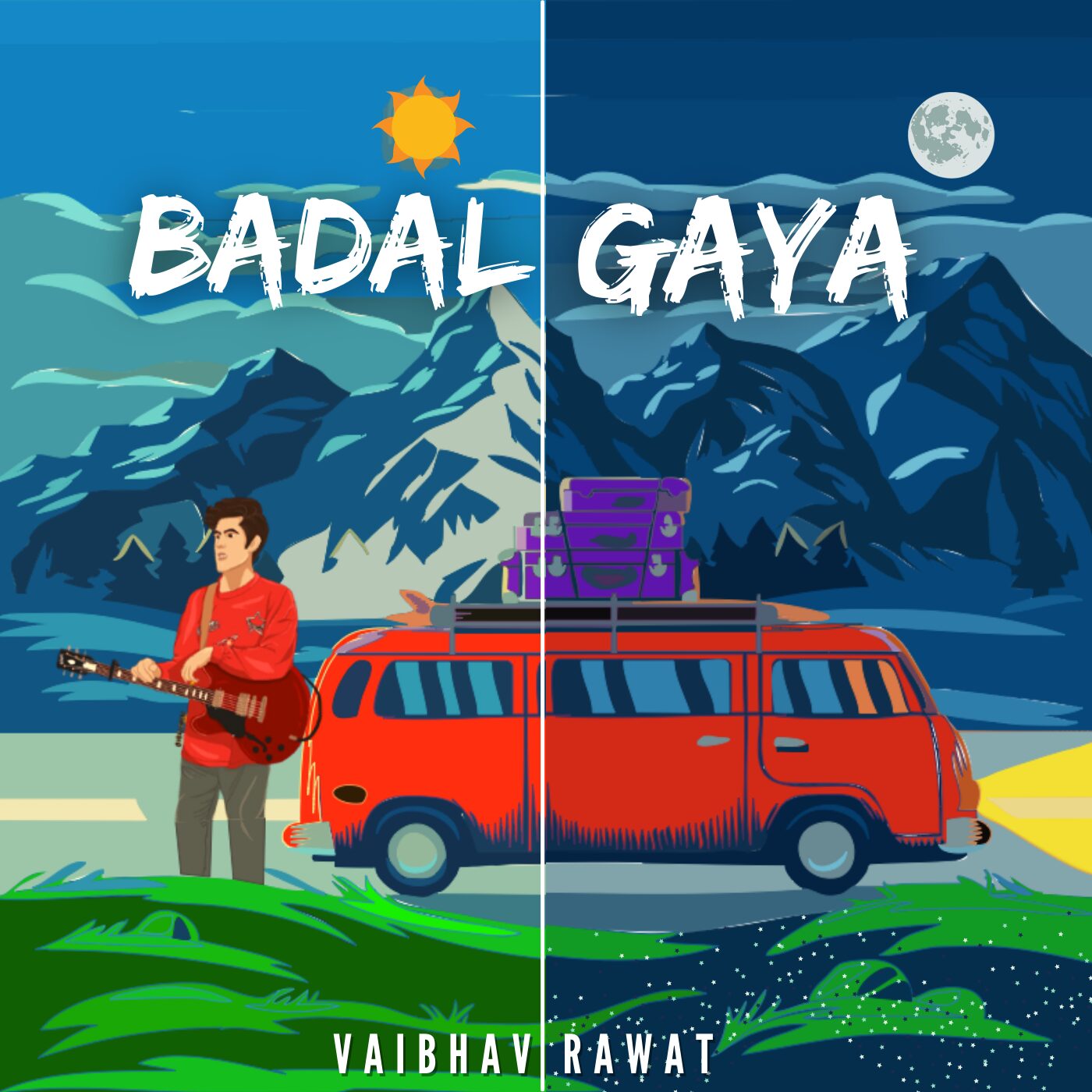
Badal Gaya
"Badal Gaya" means "changed". I wrote, composed and produced it during the pandemic, and releasing it meant doing every single job myself: artwork, video, platform metadata, launch timing, the lot. It was my first real marketing campaign, and I was the product.
First job, first real numbers
I joined Ahinsa Flour Mill as a Digital Marketing Executive. FMCG, tight budget, no room for theory. I ran the Google Ads account, rebuilt the creatives in Canva, wrote the emails, fixed the site content, and for the first time watched my decisions show up as numbers on a dashboard the next morning.
By the end I had delivered 35% organic traffic growth, a 25% improvement in PPC ROI and an 18% CTR uplift from the redesigned creative. Those figures are small next to what I manage now. They mattered more, because they were the first ones that were mine.
The bet: Leeds
I applied for an MSc in International Marketing Management at the University of Leeds and got in. Leaving India meant leaving a support system, a language I could joke in, and a set of expectations I had spent years arguing with. It was the single most expensive decision I had ever made, in every sense.
Leeds gave me the analytical half of this trade (marketing analytics, strategy, communications) and a dissertation on influencer marketing across culturally diverse settings that I still think about whenever a campaign brief says "make it global".
You cannot optimise your way to a life you have not chosen. At some point you have to buy the ticket.
The gap nobody puts on a CV
Graduating did not produce a marketing job. It produced a visa clock, a lot of applications and a long quiet stretch. I worked at Amazon in warehouse and fulfilment operations through that period, and I am not going to pretend it was a strategic career move, because it was not. It was rent.
It was also the most useful education in e-commerce I have had. I learned what actually happens between "add to basket" and a parcel on a doorstep: the pick paths, the mis-picks, the returns. I write product pages differently now because of it.
Alongside it I took on Samit Med Cure as a freelance client and built their entire WooCommerce platform from an empty database. 300+ listings, Klaviyo flows, secure checkout, live inventory. That build is what got me my next interview.
Birmingham, and the number that mattered
I joined Direct Channel Support Systems Ltd in Birmingham as Digital Marketing & E-commerce Specialist. An £80k to 100k paid budget, 2,000+ SKUs, three ad platforms, an Amazon channel and an email programme, all of it mine to own.
By the end of the year: 21x ROAS on Google Ads, 27x on Microsoft Ads, and a 23.9% year-on-year revenue increase that the whole team moved together. In March 2026 I became an Associate Member of the Chartered Institute of Marketing.
From a small town where marketing was not a recognised career, to a chartered body that says it is. I am aware of how that sounds. I still find it slightly unlikely.
What I am working on now
Going deeper on AI in marketing operations, not the demo-video version, the version that quietly removes four hours from someone's week. Building out my own practice alongside my day role. And writing more, because explaining the work is how I find out whether I actually understand it.
If you are somewhere on a similar road (an international student, a career-changer, someone whose family does not quite understand the job title) my inbox is genuinely open.